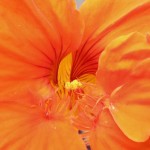
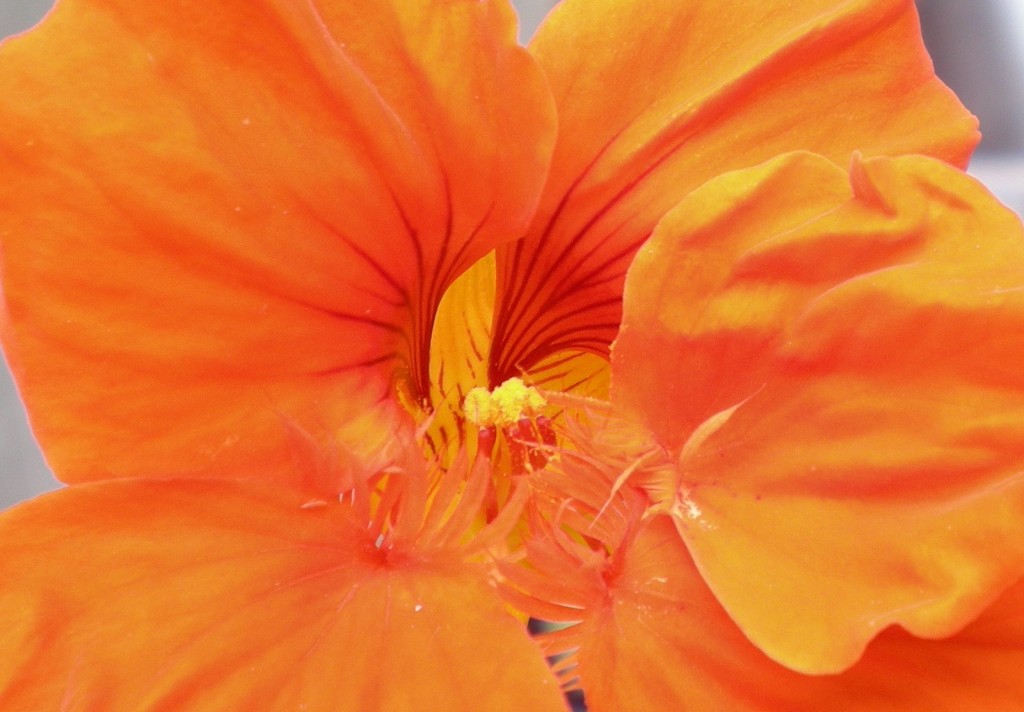
Here’s a flamenco-dancing, fiesta-loving flower for your next celebration. Yes, it is strikingly beautiful, and oh yes you can ~ eat it.
Nasturtium flower is the life of the culinary party. If you are an amateur in the kitchen, like me, topping your dishes with this sassy sunburst will make you look good.
In the kitchen, as elsewhere, I’m a little (very little) like Thomas Edison, that is, ten thousand tries and I’ve got the darn thing working. (Of course I know what I’m doing—crashing pots, pans, plates, and platters—and then mucho bueno, muchos gracias, amigos bellas. Te quiero! You see.) But, I digress. The point is that a bit of flashy flower goes a long way.
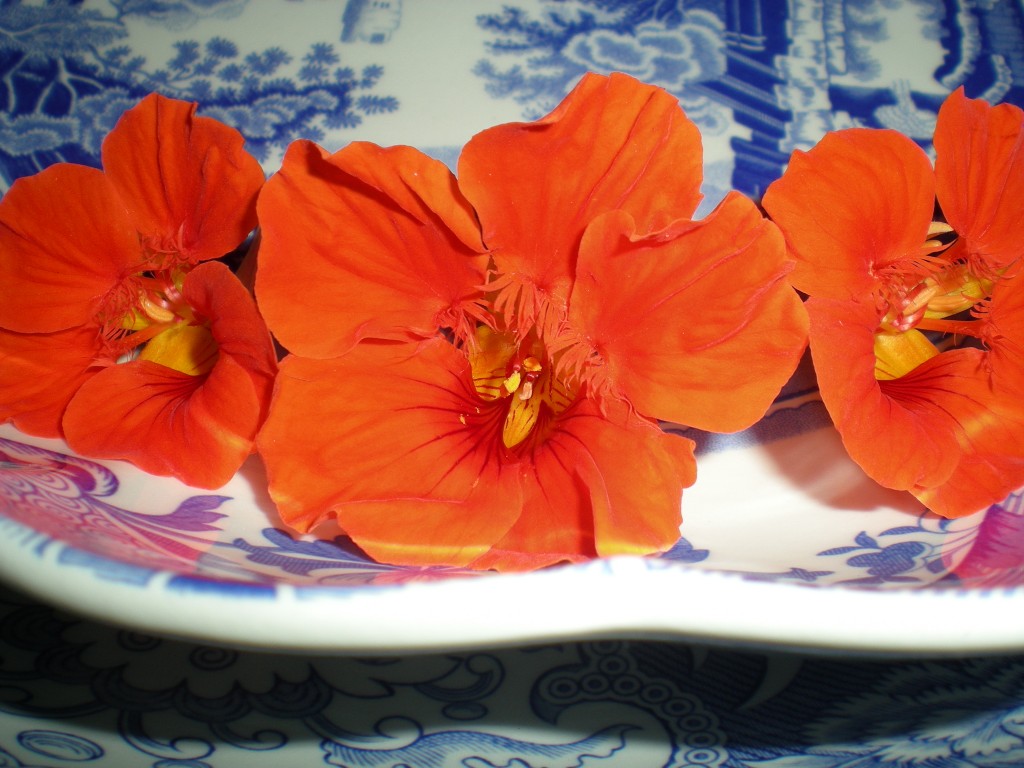
Nasturtium (Tropaeolum majus)
Go ahead and taste it. This little dynamo is spicy—subtly hot and gingery just like it looks—and after the peppery petals hit your palate, stay awake for a teensy-tiny ping of sweetness, the nectar hidden deep in the spur.
It’s not nearly as fiery as other South of the border fare, jalapeños, say, or habaneras. Red nasturtium flowers are hotter than the orange ones, but still they won’t send you running from the room, tearing and gasping.
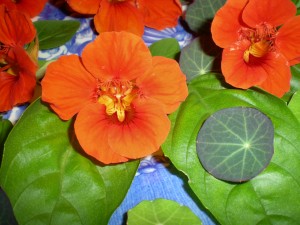
The lovely lily-pad leaves are also edible, and also peppery, and they look so darn cute floating in summer soups. Add a few flowers and leaves to any kind of summer salad to punch up the party pizzazz, or if you don’t feel like waiting, just pop a perfect flower in your mouth for a tasty treat while gardening. Do check for bugs and bees, first. (The large leaves in the following pictures are basil. The nasturtium leaves are round.)

Nasturtium for health and healing
Few data are available on the nutrition of this plant, but they say, “eat the rainbow,” and if bright-colored pigments are best for phytonutrients, well, these are bright all right. Nasturtium flower is known to be high in vitamin C, according to Andrew Chevallier, a well respected, internationally known medical herbalist.
Nasturtium is also useful as an herbal treatment. It is highly antibiotic, antiseptic, and antifungal. All parts of the plant are highly antibiotic, Dr. Chevallier reports. The plant is native to Peru, and has been used for thousands of years in the Andes for cleaning and healing wounds and for clearing chest congestion, he notes. It is often used for colds and flu.
Other fiery foods, like hot chili peppers, are known to be highly anti-inflammatory. This flower likely shares some of these properties.
***One note of caution, like parsley, ginger, and a number of other herbs, nasturtium is an emmenogogue (also, emmenagogue), an herb that may stimulate menstruation via anticoagulation. Women, especially pregnant women or those who want to become pregnant, should be aware of this. Pregnancy is not a good time to try a new herb. Any time you try a new edible plant, especially a medicinal herb, start small and watch for any unexpected reactions.

Growing nasturtium
The nomenclature for this plant is confusing. Ornamental nasturtium (Tropaeolum majus), the one we are talking about, is not the same as watercress (Nasturtium officinale) and the two are not related. To muddle things further, ornamental nasturtium is often called Indian cress, both plants are edible, and both zap a peppery zing on the palate. Happily, they don’t look at all similar, so if it looks like the pictures in this article, it is ornamental nasturtium (Tropaeolum majus).
A flower this gorgeous should be high maintenance, but it isn’t. Nasturtium may hail from the South American Andes, but it is easy to grow just about anywhere. Nasturtium grows best in poor soil that is well drained, and it likes damp, cool conditions. It needs some sun, but part shade is fine, especially during hot summer days. Too fertile soil means lots of leaves, but few flowers.
Planting nasturtium is a great project for kids, because the pea-size seeds are easy to see and to handle with little fingers. The seeds usually germinate relatively quickly, in about 10 days. Then, just water, admire, and eat.
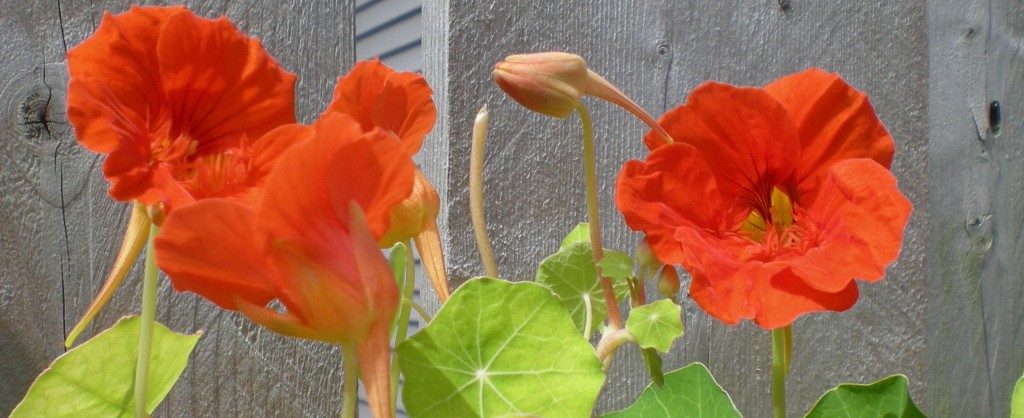


Shall we dance?
So plant some nasturtium and picture this—the whirling slap of a flamenco dress, the stamp of a high-heeled shoe, the clicking castanets and the roll of Spanish guitar strings, the tropical tangos, Caribbean limbo lines, Brazilian samba, merengue, rumba …. Whoa, you’ve got it. Olé! This flower is all that.
Have you tried this? (Nasturtium, I mean.)
PS. Thank You to Gail Simpson at Point Ellice House and Gardens for linking to this article. If you are in Victoria, British Columbia, Canada, plan a visit to this beautiful National Heritage Site and taste some nasturtium flowers from their Kitchen Garden.
© Copyright 2011, Laura J. Rongé, Ciel Bleu Media, healthiveg.com. All rights reserved. The articles here are not intended as medical, nutritional, or other professional advice. The ideas presented are for informational purposes only. Please use this information with discretion.